
.svg/750px-Flag_of_Peru_(state).svg.png)

Borders: Ecuador, Colombia, Brazil, Bolivia, Chile, and the Pacific Ocean
Some Perspective:
- Peru is about three times the size of California
- Population of approximately 29 million- Texas has a population of about 25 million.
- 77% of the population is urban, and about 1/3 of population is in Lima. Lima is about the same population of New York City (8-9 million) but twice the square mileage.
- Geography varies drastically from the arid plains of the coast, to the snow-covered peaks of the Andes mountains, to the dense tropics of the Amazon.
Demographics
Peru's people and cultures are just as diverse as it's geography. The Peruvian census does not contain information about ethnicity so only rough estimates are available. Its ethnic population is composed of Amerindians: 45%, Mestizos (mixed indigenous & European): 37%, European: 15%, black and Asian: 3-5%. Asian Peruvians have advanced quickly in business and politics in Peru (for example, Alberto Fujimori). As you may expect, the European descendants are highly centralized in Lima while the provinces are more highly Amerindian and Mestizo. Quechua is spoken in some highland communities throughout the north and south of Peru.Government
Presidential system with unicameral Congress, both have 5-year terms. President can only run for a second term after stepping down for a full term after first. Designates a Prime Minister and Council of Ministers.
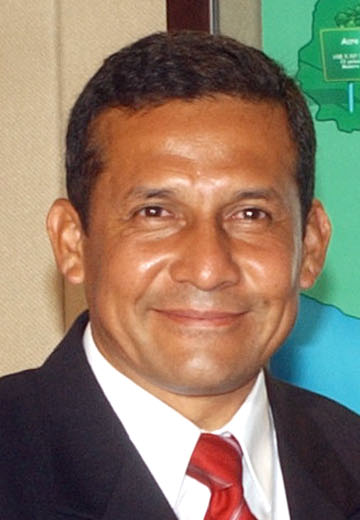
Current President (July 2011 - ). During the last election (2005) he ran on a more radical leftist platform, but has moderated himself and distanced himself from Chávez this time around. He's recruited many Brazilian consultants and says he will follow Lula da Silva's (former Brazilian president's) model for economic success that includes redistribution of wealth to the poor. He plans to add taxes to mining companies as part of that plan.
A great interview with Humala after he met with Obama and Sec. Clinton in July 2011- (Washington Post)
Economy
The economy of Peru is driven mainly by agriculture, fishing, mining, and manufacturing of products such as textiles. High prices for minerals and metals coupled with Fujimori's, Toledo's and García's trade liberalization policies produced fairly steady and at times rapid economic growth since about 2002- GDP growth was nearly 8% in 2010. Peru ranks in the top half of the Human Development Index, above countries such as Iran, Russia, and Brazil, but slightly below Costa Rica, Mexico, and Panama. Approximately 35% of the population continues to live on under $58 per month, an official indicator of poverty- in some provincial areas, especially the indigenous communities of the South highlands, poverty indicators are as high as 73%.
Terrorism and Drug Trade
Perú was known from 1980 to 1992 for the Shining Path (Sendero Luminoso) and MRTA, two Communist terrorist groups. Up to 69,000 people were killed during those years of war. Shining Path's leader, Abimael Guzman, was captured in 1992 and is serving a life sentence in prison.
Perú was known from 1980 to 1992 for the Shining Path (Sendero Luminoso) and MRTA, two Communist terrorist groups. Up to 69,000 people were killed during those years of war. Shining Path's leader, Abimael Guzman, was captured in 1992 and is serving a life sentence in prison.
Although Shining Path pretty much disappeared after Guzman's capture, terrorist cells continue to affect Peru, now as its narcotraffickers. It is believed that Peru has now overtaken Colombia as the world's largest producer of coca. Limited production of coca is legal in Peru, where chewing the leaves and drinking coca tea is considered a cultural practice, especially in the mountainous regions. Processed cocaine is illegal.
The Amazon and Environment

Tourism in the Amazon is growing, from several "entrance" points in both the north and the south. In 2005, the 3rd highest waterfall in the world was "discovered" in the northern Amazon!

Lake Titicaca, the highest-elevation lake in the world, is found on the border of Peru and Bolivia. Since 2000 it has experienced constantly receding water levels, due to shortening rain seasons and the melting of glaciers that feed the tributaries of the lake.
Indigenous Cultures
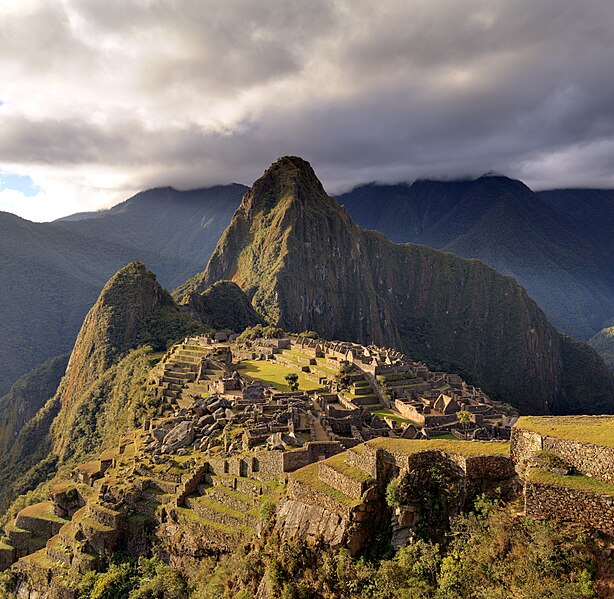 Peru draws significant tourism, and the ancient Incan site of Machu Picchu is the country's "strongest brand." The World Heritage site is now protected by restrictions on the number of visitors per day.
Seemingly ever day, new ruins of ancient civilizations are discovered throughout Peru, many of which are "Pre-Incan," from cultures that existed before the dominant period of the Incans.
-Wari
-Moche
-Chimu
-Chachapoya
 Dozens of indigenous cultures are still dispersed throughout Peru, mostly in the Andean highlands. The two biggest indigenous groups are the Quechua and Aymara, and some of these communities were part of the Inca empire. Quechua is the second official language of Peru with Spanish and is spoken by about 16% of the population. The use of indigenous languages has steadily declined over the past five decades, but there have been increasing and organized efforts to teach Quechua in public schools in areas where the language is spoken.
